
I was a child model
and all I got was a lousy loss of innocence
disclaimer: this is not my usual shopping newsletter content, but rather a - forgive the indulgence - personal essay elicited by the recent America’s Next Top Model documentary and the discourse surrounding it, as well as the decades worth of dormant memories it triggered for me. We will be back to our regular programming next week.
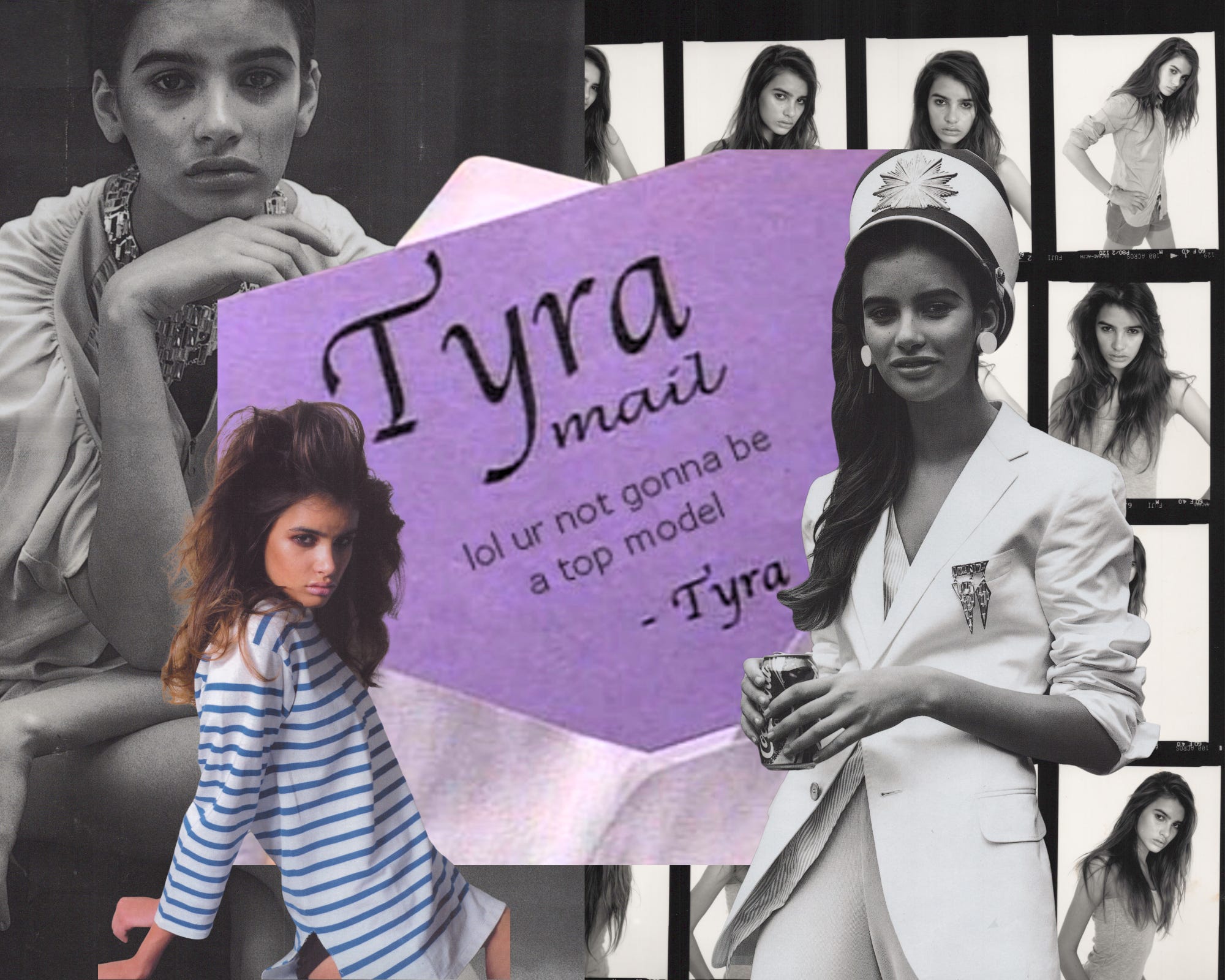
My modeling career started 20-something years ago, the summer after I turned 13. I had been scouted at the beach after watching a Teen Vogue x X Games fashion show (if you’re wondering how those two go together, all I can say is it was 2004 in Orange County. You just had to be there). A woman named Brandi approached me, asked to take a polaroid, and handed me a card that said Ford Models on it - an agency renowned and reputable enough that even my decidedly suburban parents had heard of it.
A few days later, we piled into the car and drove up to Beverly Hills to meet with Ford, where I was signed on the spot. The only thing I remember about this meeting was my dad gently chastising me for not standing up when the agency director walked in, even though I had never in my 13 years met anyone who required such deference and didn’t know to do so. I have a foggy memory of the nascent days of my career: a vague promise to my parents that would go unkept - something something, yes I’ll be sure to keep my grades up - and returning to school in the fall to proudly tell a friend that I was a Ford model, only for her to humble me by replying “you mean you model for cars?”
Here’s what I do remember about being a 13 year old model: no one wants to treat you like you’re 13. I was blacklisted from Target after arriving to their casting with some attitude because my mom and I bickered in the car the whole way there, as moms and daughters do - she insisted I needed more makeup, and I wanted to look natural1 (I’m not sure how long this blacklisting lasted, but 20+ years later, they’re the only brand in that category I haven’t shot for). I remember one client complaining to Ford because during the shoot, I was quiet and withdrawn, only to brighten when my dad came to pick me up. My agents recommended that I practice smiling and being charismatic in the bathroom mirror at home.
No one in this industry wanted to treat me like I was 13 because doing so would force them to face an uncomfortable truth: that a 13 year old is a child, and children generally have no business having things like careers, or being expected to know how to act professionally alongside actual adult professionals. No one wanted to question pairing a 27 year old male model with a tween in a way that makes them look like they’re a couple, or whether said tween should ever be put in the position of being asked to model topless, no matter how “artistically” (a.k.a., shot in black and white) it is done. No one wanted to be responsible for the loss of innocence, or even the slow erosion of it, so it was pretended that the innocence never existed, or wasn’t that important anyways.2
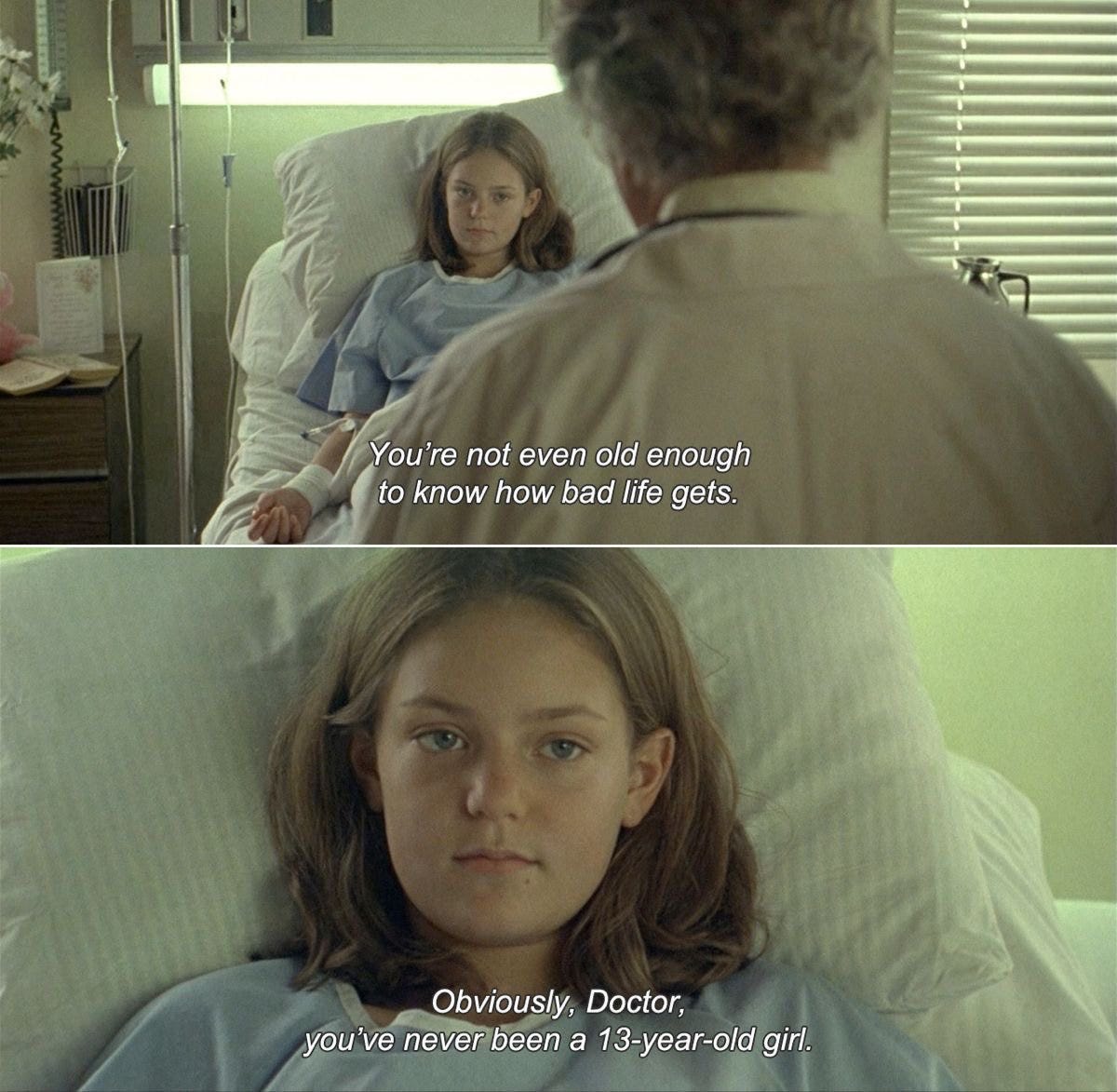
When you’re a 16 year old model, things can start to go sideways, because by then the last halo of childhood has gone out like a light, and people feel free to drop most pretenses of protectiveness. A 16 year old model can be told that she needs to lose weight, so that her parents feel pressured to hire a personal trainer, who in turn insists she go on a 1,000 calorie a day diet consisting mainly of protein shakes from a can (I can still taste the tinny, synthetic chocolate flavor in my mouth)3. A 16 year old can be flown to New York to sign with a Manhattan agency - a very big deal - only to get brutally sent home the same day because the agents didn’t realize she had acne on her forehead.
But don’t worry, it gets worse: after age 18, a client would be well within their rights to deny full payment after a 10 hour shoot because apparently you were too wide to shoot swimsuits in, or your agency may tell you that you won’t be sent on castings, and therefore unable to earn money to pay rent, until you lose an inch on your waist and hips (so better start that Master Cleanse now, babe). If you’re wondering what kind of scars these kinds of experiences can leave on a girl and her self-image, the answer is probably exactly what you’d expect.
Most models are not raised in the big cities they must live in to work. They arrive, usually alone, from poor countries or sheltered suburbs, never having been away from their family before. They have never been let off the proverbial leash, only to find themselves in a glamorous, mesmerizing world that desires their youth and beauty in the same way a vampire desires blood. Their new independence mixed with their profound guilelessness attracts all sorts of sleaze, like serial modelizers who want to buy them dinner, and club promoters who want to hook them up with fake I.D.s and buy them bottles.
When I was 18, I became friends with a fellow Ford model named Emily O’Rata (she now goes by Ratajkowski). We got booked on many of the same jobs because people thought we looked alike, a compliment I still get a high from. Emily had less experience modeling than me, but her extra years of cultivating life skills not exclusively informed by modeling made her lightyears more streetwise. At 18 she was entirely self-possessed in a way that I still marvel at. She had an understanding of what the world wanted from her beauty in a way that I had yet to learn, probably because the intensity of the sexualization she had already endured was many times greater than what I had experienced.4
There’s a story she tells in her book of essays, My Body, where I am featured as a minor character (under a pseudonym) about the “free” trip we got to Coachella, when we were both 19. The short version is this: we wanted to go to Coachella and not pay for it, so we, along with another model who is still my best friend, accepted an invitation from a club promoter. We were picked up in a party bus that had 15 other girls in it and VIP wristbands to go around, and whisked off to a mansion where there were older, rich men already partying. We were offered many drugs and later, when things started getting weird and some of the other models started making out with the older men, we snuck off, only for the promoter to follow us and kindly request that we not stop partying. The three of us slept in the same bed that night because none of us wanted to be alone. Once we got to the festival the next day, we ditched everyone and had a grand old time. The next day was much the same except the promoter took us to a party where Leonardo DiCaprio - or rather, his manager on Leo’s behalf - asked for Emily’s number (he did not get it).
Reading this shared experience from her perspective was a revelatory experience, because she knew exactly what was happening then and I didn’t, and still hadn’t processed it a decade later. I hadn’t realized the extent of my own naivety - I knew those men were creeps, but part of me really thought we had been invited for our personalities. Dazzled by words like “VIP” and “DiCaprio”, I couldn’t discern the quid pro quo that wasn’t being implied so much as it was being whispered with a sweaty, unwanted hand at our backs. She saw it for the grossness that it was, whereas I simply felt like I should be grateful for being invited, and had remembered the experience fondly as That One Time I Went to Coachella and Partied with Leo. What I know now was that I had been conditioned for 6 years to think it was normal for young girls to be objectified, sexualized, and commodified, and that not only was it normal, it was a sign that I was doing something right.5
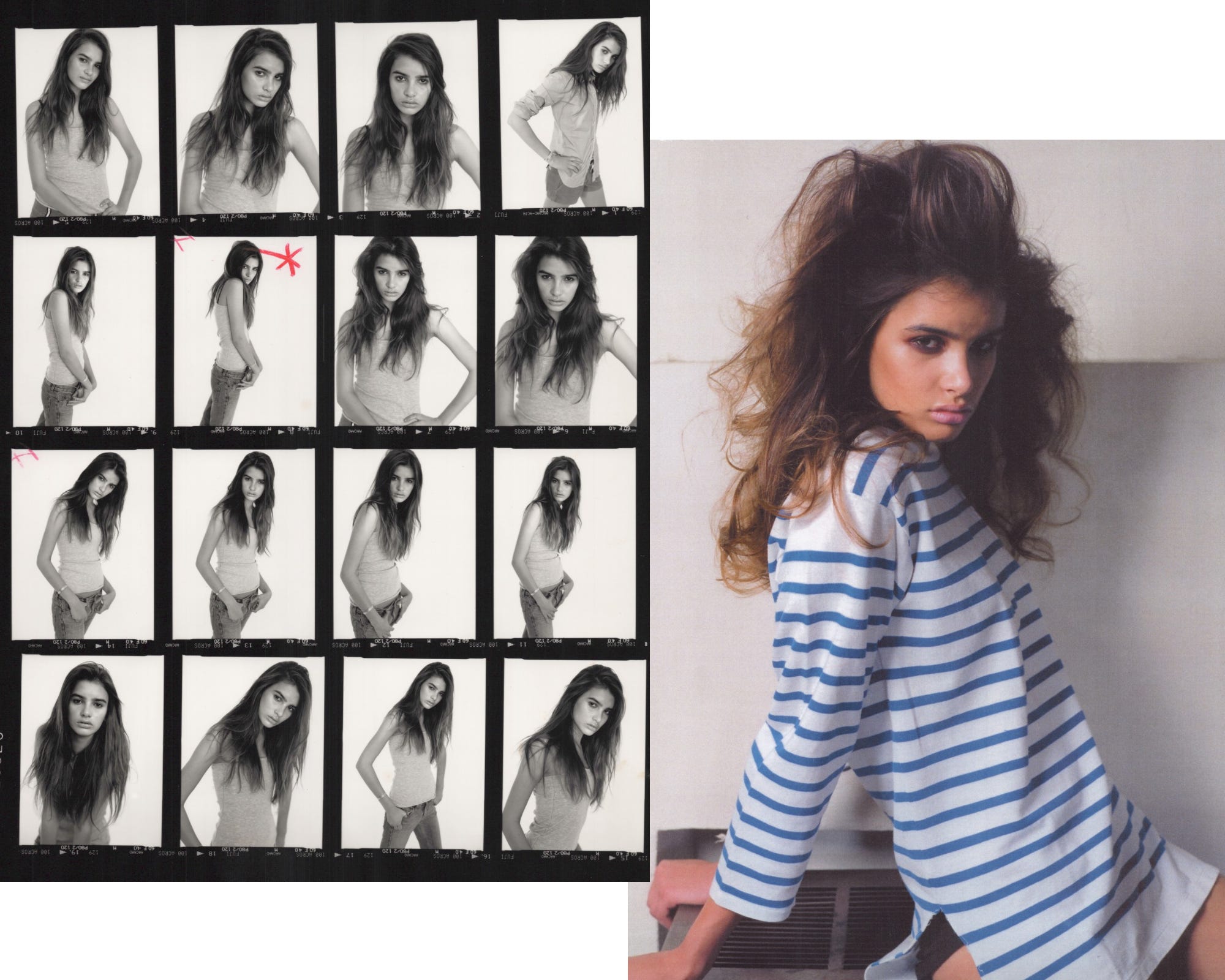
Here is the point where I feel the distinctly feminine need to apologize for everything I’ve just written, because maybe it wasn’t all that bad, and the hand that feeds me likes to go unbitten. So much has changed for the better since that vicious time, way before phrases like “body positive” and “me too” were coined. I haven’t been fired for not being skinny enough in at least 10 years (at least, not to my face) and my current agents, who I adore and trust, have been wholly supportive of me and my body, in all its forms6. I’ve seen the evolution of models, make up artists, and stylists witnessing shady behavior and going from whispering about it to each other to loudly calling it out.
Traumas aside, there has been far more good that has come out of my career - pivotal experiences I absolutely wouldn’t have had otherwise. The other side of the coin of being required to grow up too fast is that my formative years were spent with artists who created art in front of me and with me, an education more constructive than any school could have given me. Most of the people I have met in this industry, especially other models, have been kind and hard working and inspiring and have become some of the most important people in my life.
Modeling teaches unique skills, besides the ability to always know what to do with your hands when being photographed. You have to have delusional levels of confidence and skin like armor to face the constant rejection of something as personal to you as your face, while simultaneously having the humility of knowing that to most clients, you are totally replaceable. The only way to survive walking into a casting filled with 50 of the most angelic, thin, and effortlessly cool girls in the world and not crash out at the thought of your own comparative hideousness is to be able to think to yourself, “I’m the hottest girl in the room”, and to really believe it (at least until you get back into your car or on the subway - then you can crash out). It’s been years since I’ve walked into a room without my head held high (and I no longer have to practice being charismatic in the mirror, so that’s something). If you stay in the business long enough, you will eventually stop accepting all of the bullshit that comes your way. You will learn self-respect, and eventually you will stop having to fake confidence.
When I’m old and my beauty has faded, I can tell anyone who will listen about the days that I walked down runways or was the face of a brand or starred in an Usher music video. There’s a Sex and the City episode where Samantha arranges a professional nude photoshoot of herself for the purpose of self-preservation - a provable record of her bygone hotness. I watched that as a teenager and thought how I would never have to worry about that because I already had thousands of photos by then to choose from. Being entrusted by someone, out of all of the beautiful girls they could have picked, to bring their vision to life is a dizzying honor. My dad marveled once at me being signed by what was at the time one of the top modeling agencies in the world because this meant, statistically speaking, that of the entire global population I had to be in the top 1% of attractiveness.
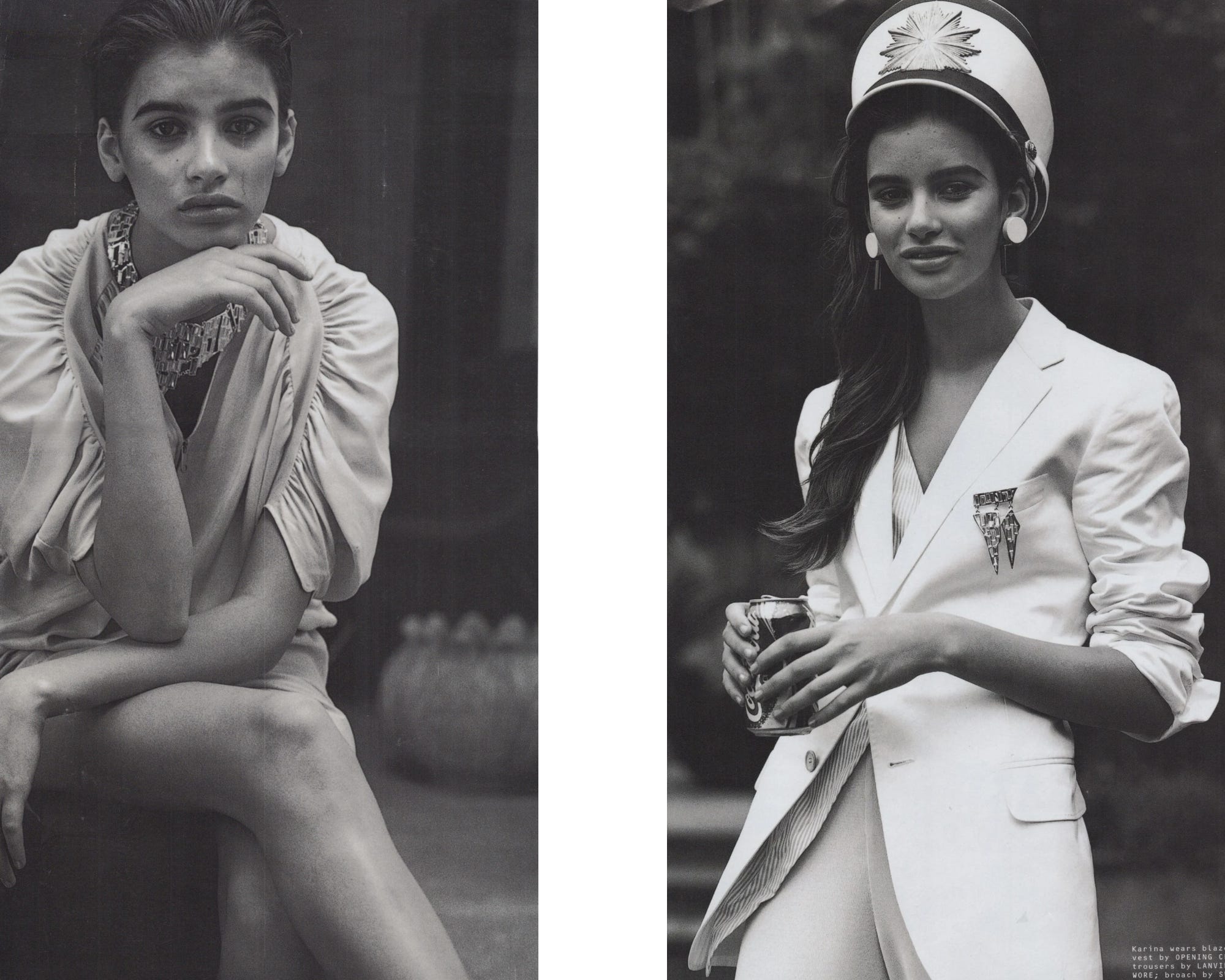
One of the most common questions you get asked as a model is “what do you plan on doing after?” I don’t know of any other career, besides perhaps professional athletes, where it’s a forgone conclusion that longevity is impossible. It’s just assumed that you’ll quietly dip out at around 30, a drooping flower in an endless field of budding blossoms, and go get your real estate license with dignity. Unlike professional sports, modeling is the rare job where experience and job performance can count as a negative. Clients would often rather pay for the fresh face, as awkward and stumbling and Bambi-like as they may be, because having a fresh face is one of the highest currencies you can have as a model.
Watching the America’s Next Top Model doc reminded me how much of this industry is clients working against their own self-interests in the name of conforming to toxic standards. Tyra talks about how many times she would get rejected because she’s black, even though the clothes were selling better on her. For much of my career, I was a spot-on sample size, meaning I fit perfectly into the clothes used for photoshoots, whereas the thinner models had to have samples pinned to the gods just to have them fit7. That meant styling time was being saved on me, as well as clients not having to deceive their shoppers, but it counted as a negative because it was evidence I wasn’t as skinny as the other girls. I cannot tell you how many times I’ve had clients thrilled with my performance - my ability to move in front of the camera, my efficiency in getting the desired shot, my learned professionalism - only to never hear from them again.
A model without a back-up plan for this inevitable conclusion - like a degree or a rich husband or some real world skill that is valuable because it’s useful, not because it’s simply “being young and hot” - is surely someone inflated by their own hubris, and yet somehow I’ve been able to stay the course, even as the course gets narrower and the jobs come in slower. I’ve stubbornly hung on for over two decades, past a brief pivot to culinary school, past getting married and having a baby, past the point of starting Botox and picking out burgeoning gray hairs, past the retirements of almost every other model I came up with (even the more successful ones). When I go to castings now, some of the girls I’m competing with for jobs had not yet been born when I started.
It haunts me to think of where I would have ended up as someone with a then-undiagnosed learning disorder and the ambitions and skill sets of a pampered, 18th century French royal, if modeling had not fallen into my lap. The since-diagnosed learning disorder has kneecapped any desire for a higher education, and admittedly I did get incredibly lucky with a supportive spouse. More than anything though I simply don’t know how to do anything else, and I’ve never really wanted to try. Starting a career like modeling at 13 all but guarantees arrested development, similar to how they say celebrities keep the personalities they had at the age they became famous for the rest of their lives.
It feels really good to be good at something, and I am very good at modeling. I know this because of my unlikely longevity, the way I feel totally natural in front of a camera, and the countless times clients have told me things like “it’s so nice to have a model who knows what she’s doing for once.” It’s hard to leave something you’re good at, especially when it is - most of the time - a cushy job that a very small set of people are qualified for, pays well, and when professional ambition is a characteristic that you utterly lack, like being able to sing on key. After I had gone through the worst of the toxicity and had come out on the other side somehow more secure, I was astonished to realize how much fun I could have at work, and how lovely my coworkers could be. I hope to be modeling for at least another 20 years, if the industry will let me (besides, it turns out posting a bunch of affiliate links on Substack for 1% commission isn’t all that lucrative).
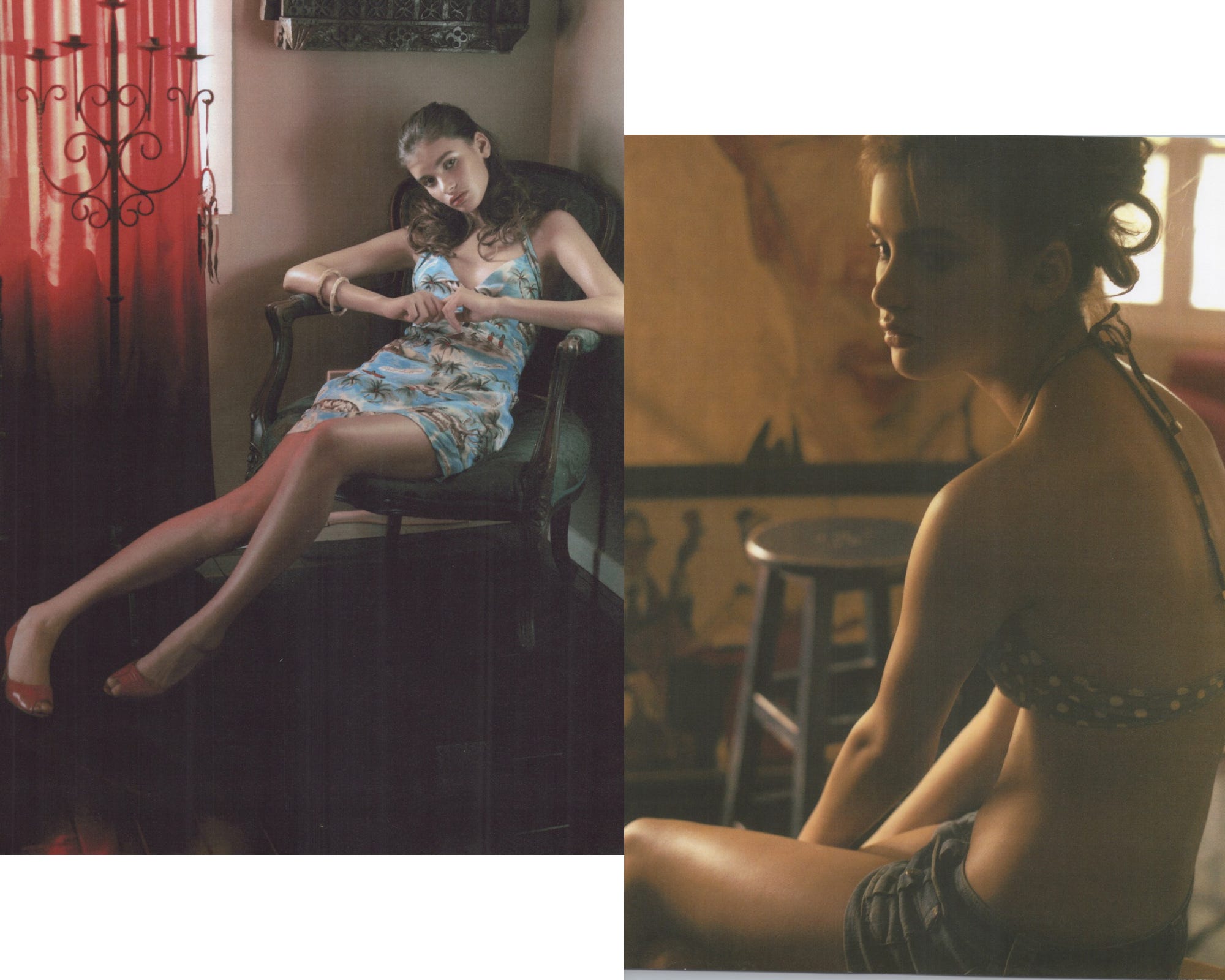
I often get asked if I would let my daughter model when she’s older. As much as it’s up to me, the answer is emphatically no, and fuck no to anything under 18. Even if I were to ignore my own traumas, modeling ties self-worth to appearance in an unavoidably literal dollar value sense, and ultimately I would prefer that she enters a field that is a net positive to society. Mostly though, I don’t want this for her because I don’t want her to want it. Any 13 year old girl is likely to be as seduced as I was by the most glamorous and solipsistic form of employment there is, but I’d like my daughter to want more - something better, something harder - for herself. Wouldn’t most parents rather their daughter aspire to be Joan of Arc than Marie Antoinette, tragic endings aside? (or the ultimate dream - the work ethic of Joan with the aesthetics of Marie). There is, of course, nothing wrong with modeling to earn a living or put yourself through school or simply to have a unique experience, and god knows young women don’t need to have any more judgment passed down on their life choices. I just hope my daughter has a loftier, more magnanimous imagination for career fulfillment than I did.
I might feel different if the glory days of modeling weren’t so far in the rearview they’ve become invisible. In the age of social media, even at the highest level it has become the cheapest and most vainglorious form of artistry, if it wasn’t already. Speaking generally, the greatest ambitions in this industry have gone from being Kate Moss in the 90’s, slipping into different skins, wholly transforming on the runway in front of our eyes, to being an Instagram post of Kate Moss’s street style - that is to say, to disingenuously play the part of the ultimate trendsetting cool girl, getting forever posted and reposted, thus creating endless trend cycles for us all to buy in to.
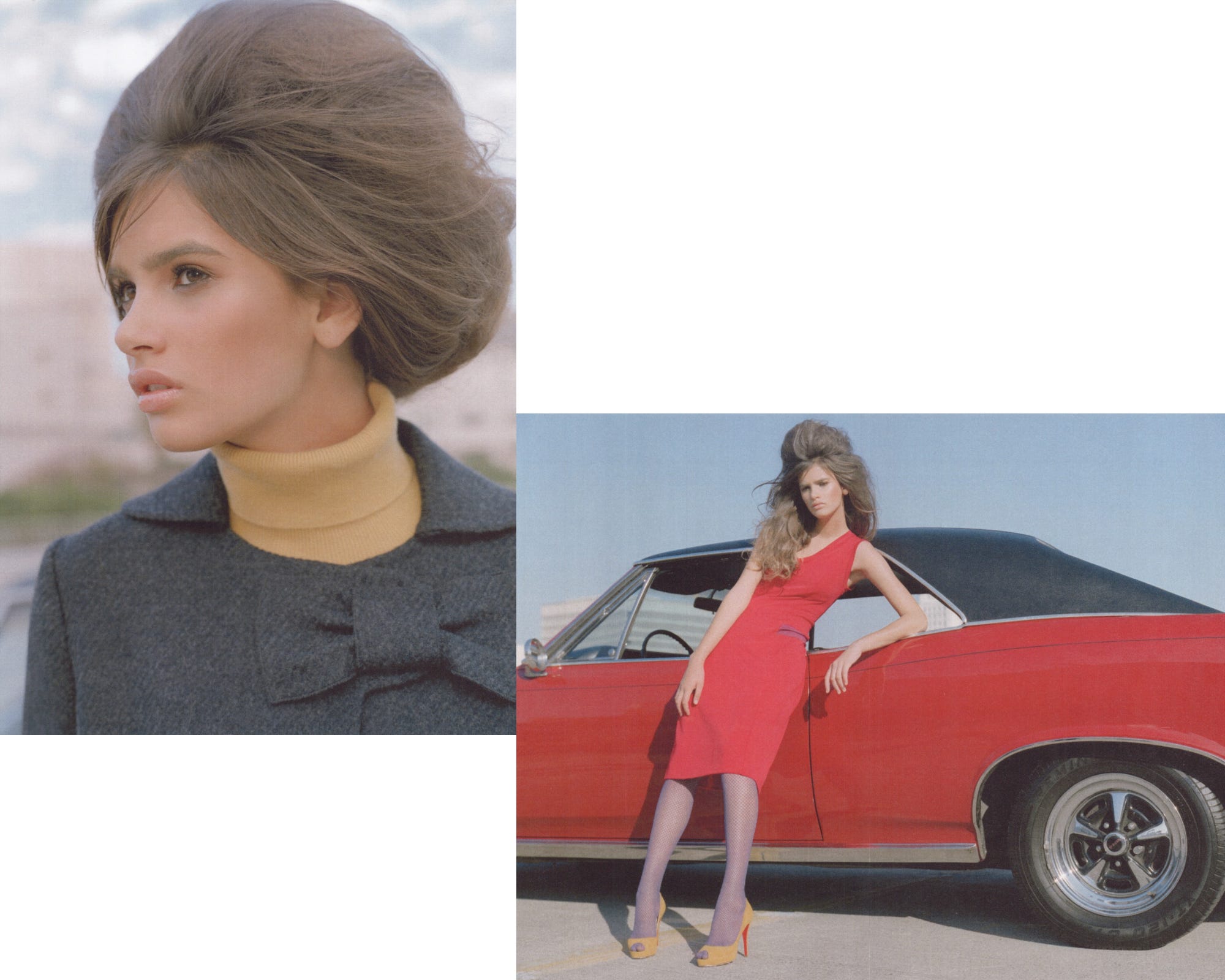
Social media and over-consumption has plasticized much of the mystique and romance of modeling into something thin in substance and broadly inessential, even as talented make up artists, photographers, and stylists toil away, creating art for 12 likes on a post. I still have the images of the Vogue editorials and W covers I studied religiously as a teenager burned into my brain. It’s hard to imagine anything being produced today having such a lasting impact on anyone, either because they inspire so little emotion or because our attention spans are short and our feeds are endless. Any girl who is similarly pouring over a Vogue editorial today (bless her heart) would have Kendall Jenner8 as the apex supermodel to aspire to, with all of her nepo baby reality TV fame and sports betting brand deals - a much more cynically capitalistic idol than the Daria Werbowys, Gemma Wards, and Alek Weks I was reared on.
It’s difficult to see a future for this industry that contains anything hopeful or culturally meaningful. Modeling began to lose ground to AI years ago, and once the bad PR stench of using AI instead of human beings eventually becomes normalized, it’ll be hard for most brands - from small budget designers to money-minting corporations - to justify paying for them. Talent, skill, creativity, and putting food on people’s tables can be quite expensive, after all. Very few tears will be shed for the models who lose their livelihoods to AI in comparison to writers and painters and even software engineers, and that’s probably how it should be, even though - for what it’s worth - it’s perhaps the only field other than sex work where women make much, much more than their male counterparts.
Few people will be compelled to pity the pretty girls who should have had an exit strategy, and even less will mourn an industry that is seen by most as being as frivolous as Zoolander at best and as psychologically damaging as ANTM at worst. But something will be lost, and not just an entire industry’s worth of livelihoods and creative output. Tangible things, like the otherwise impossible opportunities for young girls in poor places to extricate themselves and support their families, and more intangible things, like whatever humanity is left in the fashion industry. After all, there’s nothing quite as uniquely, vulnerably, and wonderfully human as a teenage girl.
My mom was an almond mom before the term was invented (literally, all she would bring for us to eat during long trips to castings were unseasoned, raw almonds). It’s about the worst thing I can say about her. Third-world immigrant survivor mentality can sometimes be quite destructive in the face of something as exciting as a prospective golden ticket to the American Dream.
2004 was the same year the model agent and accused child sex trafficker Jean-Luc Brunel opened an agency with funding from Jeffrey Epstein, who allegedly bragged he had “slept with 1,000 of Brunel’s girls”. It’s now common knowledge that Epstein used various modeling agencies and industry associates to source his victims, which would have been very hard to do without some cooperation.
So much of this attitude was completely normalized in this era. Putting your teenage daughter on a strict diet because you’re told in no uncertain terms that it’s the only way she will ever work may sound shocking in 2026, but in 2004 it was just business as usual. I don’t blame my parents for what I consider to be a huge misjudgment (really, they should have told my agents to fuck off) - they thought they were doing what was best for me.
For the record, if you want the tea: she was always an It Girl, even when we were both in the trenches of Forever 21 ecomm shoots, working for peanuts. It just radiated from her.
The other part of her essay that hit me like a ton of bricks was her characterization of me: she remembers me as a timid girl who hid behind her hair. Which of course was true at the time, but damn I didn’t expect to get read so hard.
Best not to get me started on the labor and worker’s rights, or lack thereof. If you think body shaming is shocking, just wait until you hear some of the standard payment practices. Modeling is long overdue for unionization, but I doubt it will ever happen.
If you’ve ever shopped online, just know that behind every model there’s probably porcupine-level pins and clips protruding from her back holding up the clothes.
It’s hard to name a non-nepo baby model who has made a real impact in the last few years, other than perhaps Paloma Elsesser or Vittoria Ceretti (and much of that is due to her boyfriend being Leonardo DiCaprio). Bhavitha Mandava making quite a splash after her recent Chanel opener was nice to see, but it’s telling that much of that impact came from TikTok virality.
Beautifully written. You are clearly multi talented!
Had no idea you modeled, and loved reading every bit of this, thank you!